The Commuter's Dilemma: Comparing the I-25 vs. C-470 Commute When Choosing a Home
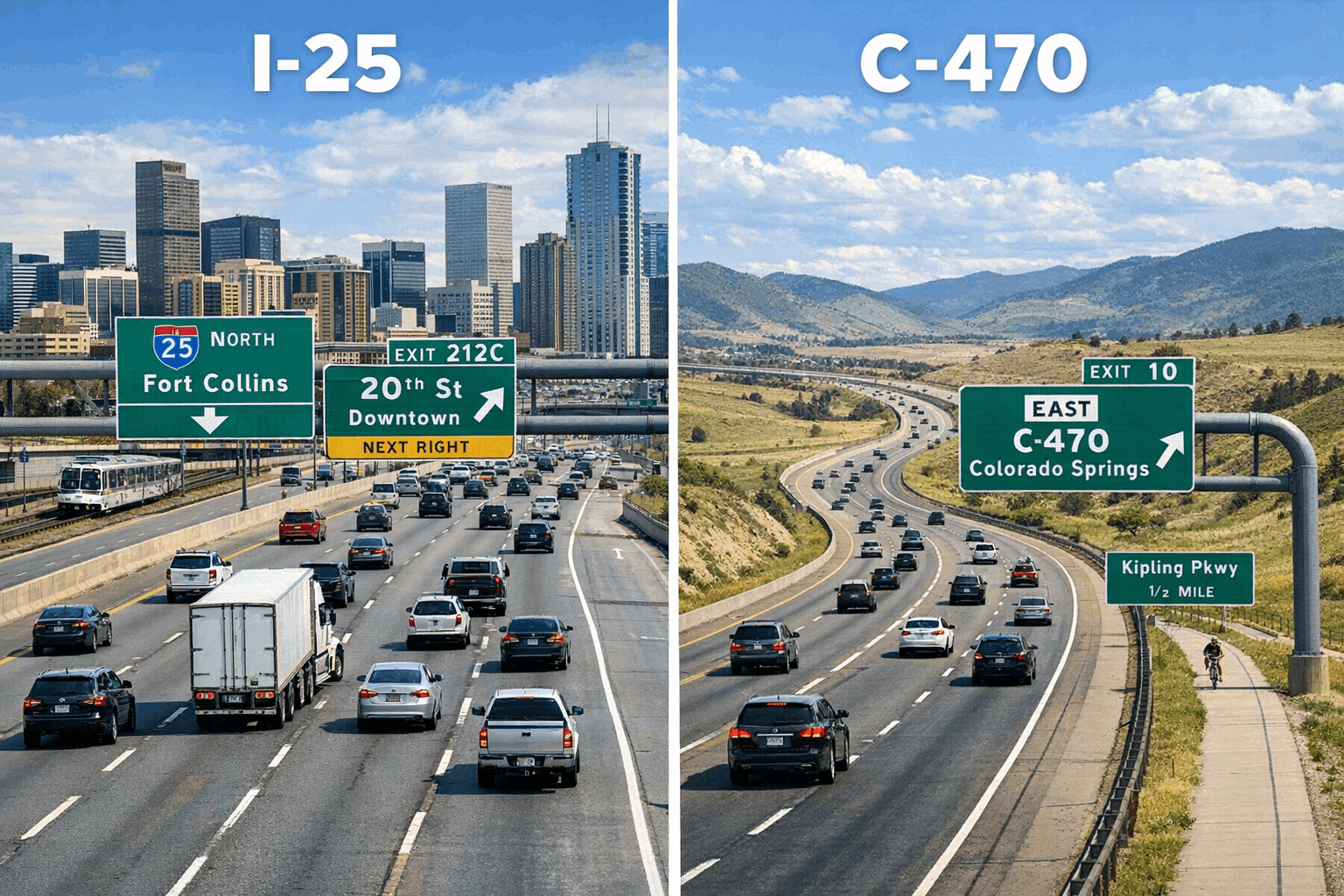
The Commuter's Dilemma: Comparing the I-25 vs. C-470 Commute When Choosing a Home
One of the biggest decisions when choosing where to live in Metro Denver isn't just about the neighborhood—it's about your daily commute. For many buyers, the choice comes down to living near I-25 (north-south corridor) or C-470 (the circumferential highway serving south and southeast Denver). Rick Cavallaro and the team at Rhino Realty Pros help buyers weigh these commute options carefully, understanding that your daily drive significantly impacts quality of life, property values, and long-term satisfaction. Let's break down both commute corridors to help you make an informed decision.
The commute you choose affects not just your daily stress level—it impacts your home price, neighborhood options, schools, and overall lifestyle. Understanding both corridors is essential to choosing the right neighborhood.
I-25: The North-South Artery
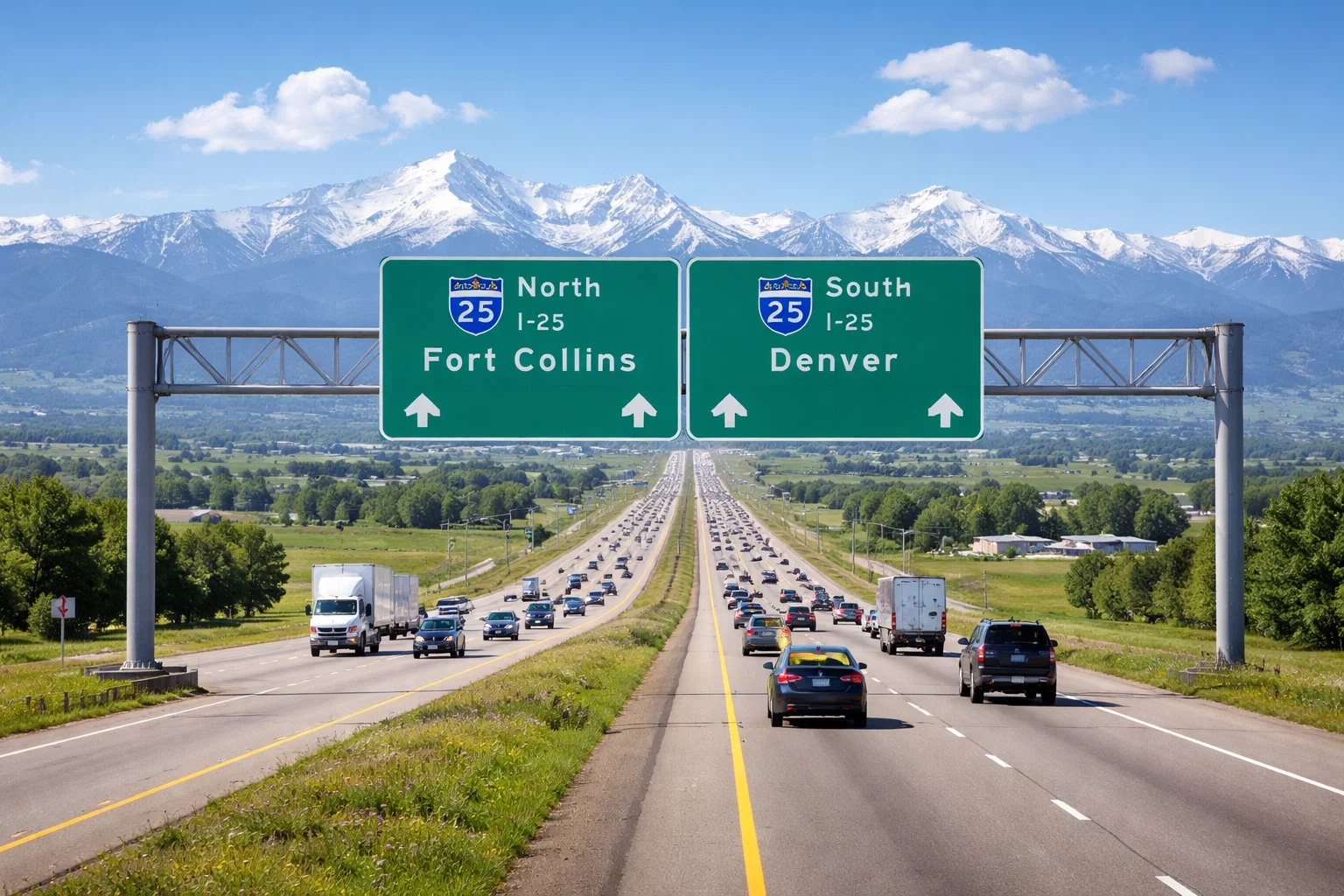
I-25 is Metro Denver's primary north-south corridor, connecting Denver to Boulder in the north and Colorado Springs in the south. It's the main highway for anyone commuting to downtown Denver, DTC (Denver Tech Center), or north to Boulder and Broomfield employment centers.
Rush hour traffic: Heavily congested north and south 7-9am and 4-7pm. Average commute times: 20-45 minutes depending on distance. Traffic volatility: High. Accidents create significant delays. Weather impact: Significant during winter storms. Employment centers served: Downtown Denver, DTC, Boulder, Broomfield, Fort Collins. Neighborhoods served: Capitol Hill, Cherry Creek, Downtown, Littleton, Castle Rock, Colorado Springs.
I-25 is essential for anyone working downtown, in DTC, or in north Denver employment centers. However, traffic is notoriously unpredictable. Rush hour congestion is severe, and a typical 20-minute commute can balloon to 45+ minutes with accidents or weather.
Advantages of I-25 Access
The primary advantage of I-25 access is connectivity to major employment centers. Downtown Denver, Denver Tech Center, Boulder, and north Denver corridors are all directly accessible. If your work is in these areas, I-25 is unavoidable. I-25 neighborhoods also tend to have more established amenities, better schools, and higher walkability since they're in closer-in suburbs.
Disadvantages of I-25 Access
The major disadvantage is traffic unpredictability. I-25 is notoriously congested, and delays are common. Additionally, I-25 neighborhoods tend to be higher-priced due to demand. You're paying a premium for established neighborhoods and proximity to downtown. Air quality near I-25 corridors can also be a concern due to vehicle emissions.
C-470: The Circumferential Alternative
C-470 is a relatively newer circumferential highway serving south and southeast Denver, creating an alternative to I-25 for certain commute patterns. Rather than going through downtown, C-470 allows drivers to go around Denver, connecting to employment centers in Castle Rock, the south Denver tech corridor, and east Denver areas.
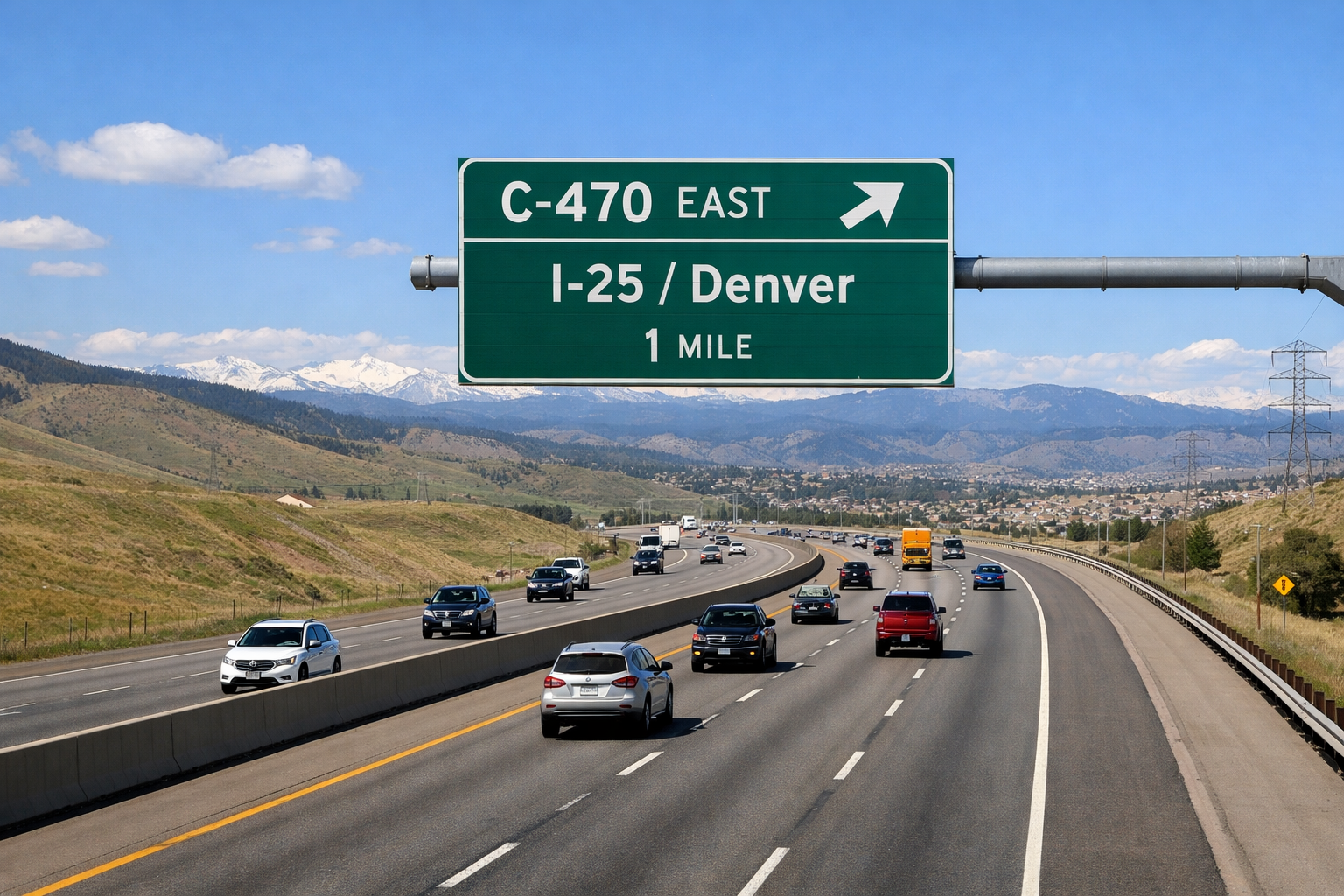
Rush hour traffic: Moderate congestion, less severe than I-25. Average commute times: 25-40 minutes for south/southeast routes. Traffic flow: More predictable than I-25. Weather impact: Lower than I-25 (less urban impact). Employment centers served: Castle Rock, south Denver tech corridor, Centennial, Littleton, Parker. Neighborhoods served: Littleton, Highlands Ranch, Lone Tree, Castle Rock, Parker, Centennial.
C-470 is ideal for anyone working in south Denver, Castle Rock, or southeast Denver employment centers. It bypasses downtown entirely, creating a more direct route for these commutes. Traffic is generally less severe than I-25.
Advantages of C-470 Access
The primary advantage is predictability. C-470 traffic is less volatile than I-25. Commutes are more consistent, and delays are less likely. Additionally, C-470 neighborhoods include some of the most desirable suburbs in Metro Denver: Highlands Ranch, Castle Rock, Parker. You get access to excellent schools, family-friendly neighborhoods, and strong property appreciation. Cost of living is often lower than comparable I-25 neighborhoods due to slightly longer distances from downtown.
Disadvantages of C-470 Access
The main disadvantage is limited access to downtown Denver and north Denver employment centers. If your work is in DTC via I-25, downtown, or Boulder, C-470 requires longer drives or I-25 connections. Additionally, C-470 neighborhoods are sometimes newer developments, meaning fewer established amenities or lower walkability compared to established I-25 neighborhoods.
Commute Time and Stress: The Real Cost
Beyond just travel time, commute stress significantly impacts quality of life. A predictable 35-minute C-470 commute often feels less stressful than a variable 25-45 minute I-25 commute where you're constantly frustrated by congestion and delays.
Average I-25 commute (north-south): 30-40 minutes, high stress. Average C-470 commute (east-west around Denver): 30-35 minutes, moderate stress. Annual driving time: I-25 commuter = 120-160 hours. C-470 commuter = 120-140 hours. Fuel cost impact: Slight difference (C-470 slightly higher due to distance). Vehicle wear impact: I-25 higher due to stop-and-go traffic. Mental health impact: I-25 stress significantly higher.
Home Prices: Location and Commute Tradeoffs
Home prices reflect commute accessibility and desirability. I-25 neighborhoods close to downtown command premium prices. C-470 neighborhoods, while increasingly desirable, often offer better value.
A comparable home in Highlands Ranch (C-470) might cost $50k-$100k less than the same home in Cherry Creek (I-25). You're getting similar quality but further from downtown. This represents meaningful value for buyers willing to accept slightly longer commutes to south Denver employment centers.
Schools and Neighborhoods: I-25 vs. C-470
Both corridors offer excellent schools, but the character differs. I-25 neighborhoods (Littleton, Cherry Creek, Capitol Hill) are more urban/established. C-470 neighborhoods (Highlands Ranch, Parker, Castle Rock) are more suburban and family-oriented.
If you prioritize urban walkability and established culture, I-25 neighborhoods excel. If you prioritize family amenities, larger homes, and newer construction, C-470 neighborhoods are superior.
Remote Work Changes Everything
With remote work flexibility, the commute calculation changes dramatically. Buyers who work from home 2-3 days weekly can live further out on C-470 (cheaper, better neighborhoods) and drive I-25 to downtown only occasionally. This hybrid approach captures the best of both worlds.
For fully remote workers, commute corridor becomes almost irrelevant. You can choose neighborhoods purely based on lifestyle, schools, and preference rather than job proximity. This opens up additional options in both corridors.
Making Your Decision: Questions to Ask Yourself
Where does your work actually require you to be? How many days weekly are you in the office versus working remotely? What's your tolerance for traffic stress? Do you prioritize urban walkability or suburban family amenities? How important is home price relative to commute time? Are schools a priority? What's your timeline for potential job changes?
Answering these questions clarifies which corridor makes more sense for your situation. There's no universal right answer—it depends entirely on your specific circumstances.
The Bottom Line: Match Your Commute to Your Life
I-25 offers direct access to downtown and north Denver employment centers but comes with traffic stress and higher prices. C-470 offers predictability, better value, and excellent neighborhoods but works best for south/southeast Denver commutes.
Smart buyers choose their neighborhood based on both commute pattern AND lifestyle preferences. You shouldn't live in an I-25 neighborhood if your work is south Denver just because I-25 "sounds" more central. Similarly, don't live in C-470 suburbs if you work downtown and hate commuting—the daily stress isn't worth any price savings.
Rick Cavallaro and Rhino Realty Pros help you analyze both commute corridors, evaluate your specific situation, and find neighborhoods that align with your actual commute needs and lifestyle preferences. Let's find the right fit for you.
Ready to Find Your Perfect Commute and Neighborhood?
Contact Rick Cavallaro and Rhino Realty Pros today. We'll help you evaluate your commute options, analyze both I-25 and C-470 corridors, and find neighborhoods that match your work location and lifestyle. Let's find your ideal home in the right location.
Schedule Your Neighborhood ConsultationCategories
Recent Posts