Radon in Colorado Homes: What Every Adams County Buyer Should Know
Radon in Colorado Homes: What Every Adams County Buyer Should Know
Radon is one of those home-buying topics that gets mentioned during inspections, appears on disclosure forms, and then gets largely forgotten — until something goes wrong. Most people don't fully understand what radon is, why Colorado specifically has higher concentrations than most of the country, what the actual health risk is, what to do about it, or what role it should play in their purchase decision. The silence around radon often comes from the simple fact that it's invisible, odorless, and doesn't cause any immediate problems, which makes it easy to deprioritize relative to roof condition or foundation cracks.
Rick Cavallaro and the team at Rhino Realty Pros take radon seriously because the EPA takes it seriously, because the research on health effects is substantial and concerning, and because Colorado's geological position makes radon a legitimate consideration in every home purchase in Adams County. This guide covers what radon is, why Colorado has an elevated radon problem, what the health risks actually are, how to test for it, what to do if levels are high, how radon factors into purchase decisions, and what sellers and buyers each need to know about disclosure. By the end, radon won't be a mystery item you check off — it'll be a factor you understand and can act on intelligently.
What Is Radon? The Basics
Radon is a naturally occurring, colorless, odorless, radioactive gas that comes from the decay of uranium and radium in soil, rock, and building materials. It's present to some degree everywhere on Earth — in the soil beneath homes, in underground water, and in the air we breathe. The question that matters for homeowners isn't whether radon is present, but in what concentration, because elevated concentrations represent a genuine health risk.
Radon enters homes through cracks and gaps in foundations, through drainage systems, through construction joints, and through other pathways that connect the soil beneath a house to the air inside it. Once inside, radon gas can accumulate, particularly in basements and below-grade spaces where air circulation is lowest. Over extended periods of exposure to elevated radon concentrations, the radioactive particles inhaled into the lungs increase the risk of lung cancer — the primary health concern associated with radon exposure.
The critical point: radon isn't a structural issue like a bad roof. It's not a performance issue like a failing HVAC system. It's a health issue — and a preventable one with proper testing and mitigation. Understanding that distinction is key to taking it seriously without panicking.
Why Colorado (and Adams County) Has a Radon Problem
Colorado sits on geological formations with naturally elevated uranium and radium content, particularly across the Front Range and the Western Slope. The state's position on the edge of the Rocky Mountains, combined with its dry climate and rocky terrain, creates conditions where radon gas is produced at higher-than-average levels in the soil. Adams County, sitting on the Front Range's doorstep and featuring both exposed geological formations and developed areas built over uranium-bearing shale, is specifically affected by this geologic reality.
The EPA has designated Colorado as a Zone 1 state — the highest risk category for radon — meaning that elevated radon levels are expected and common. The Colorado Department of Public Health and Environment specifically warns that one in three Colorado homes is estimated to have radon levels above the EPA's recommended action level. Adams County, being part of Colorado's Front Range corridor, follows that general pattern. In practical terms: if you're buying in Adams County, there's a statistically significant chance the home will have elevated radon levels.
This is not a reason to avoid Adams County. It's a reason to test every home you're considering purchasing and to factor radon mitigation into your evaluation. It's a problem that's both common and solvable — but only if you test for it and address it.
Radon Health Risks: What the Research Shows
The EPA and the U.S. Surgeon General identify radon as the second leading cause of lung cancer in the United States after smoking. For non-smokers, it's the leading cause. The risk increases with both the concentration of radon and the duration of exposure — long-term exposure to elevated levels carries significantly higher risk than short-term exposure.
The mechanism is straightforward: radon decays into radioactive particles that, when inhaled, lodge in lung tissue and irradiate it over time. The risk increases proportionally with concentration levels. At low concentrations, the risk is minimal. At very high concentrations, particularly over decades, the risk becomes substantial. For a homeowner, the practical consideration is: at what level should I be concerned enough to take action?
The EPA's recommended action level is 4 pCi/L (picocuries per liter) — above this level, the EPA recommends radon mitigation. Homes at or below this level are considered acceptable risk. Below 2 pCi/L is ideal. Between 2–4 pCi/L is a gray zone where many experts recommend testing again to confirm levels, and some recommend mitigation as a precaution. Above 4 pCi/L, mitigation is warranted. At very high levels — above 10 pCi/L — the EPA considers the health risk severe and strongly recommends immediate mitigation.
⚠️ Radon and Lung Cancer: The Key Facts
Radon is the second leading cause of lung cancer after smoking. For non-smokers, it's the leading preventable cause. The EPA estimates that radon causes about 21,000 lung cancer deaths annually in the United States — about 10% of all lung cancer deaths.
Risk increases with concentration and duration. A homeowner exposed to 4 pCi/L of radon for 30 years faces an elevated lifetime lung cancer risk. The higher the level and the longer the exposure, the greater the risk.
Radon risk is preventable. Testing and mitigation reduce radon concentrations effectively, eliminating most of the health risk. This is not a problem you have to live with if you address it properly.
Radon Levels: Understanding the Numbers
Radon is measured in picocuries per liter (pCi/L) — a unit that quantifies radioactive decay. The EPA's action level is 4 pCi/L, but understanding the full spectrum of levels and what they mean for health is important for homeowners.
EPA Radon Action Levels & Risk Assessment
Important context: radon levels fluctuate seasonally and can vary considerably within a single home depending on basement vs. living level and time of day. A single radon test is a snapshot of conditions at one moment. For accurate assessment, the EPA recommends testing for at least 48 hours to two weeks depending on the test method, and retesting periodically to confirm that levels are stable or that mitigation efforts are working.
Radon Testing: How to Know Your Home's Level
Testing for radon is straightforward, affordable, and essential before closing on any Adams County home. There are two main testing approaches: short-term tests (2–7 days) and long-term tests (90+ days). For a real estate transaction, short-term testing is standard and provides a reasonable snapshot of radon levels.
For a home purchase, Rick Cavallaro and Rhino Realty Pros recommend including radon testing as part of the professional home inspection — or arranging a separate radon test if the inspector doesn't provide one. The investment is modest ($150–$300 for professional testing) relative to the purchase price and the health implications of not knowing your home's radon status.
Important: Colorado law requires that sellers disclose known radon test results or radon mitigation systems in their property disclosures. If a seller has tested the property and knows radon levels are elevated, that information must be disclosed. If a home has an existing radon mitigation system, that's a sign the seller previously dealt with radon and the system should be tested to confirm it's functioning properly.
Radon Mitigation: What to Do If Levels Are High
If radon testing reveals elevated levels, the next question is mitigation — how to reduce radon concentrations to acceptable levels. The good news: radon mitigation is effective, well-understood, and relatively affordable. Most homes with elevated radon can be brought to safe levels with proper mitigation.
How Radon Mitigation Works
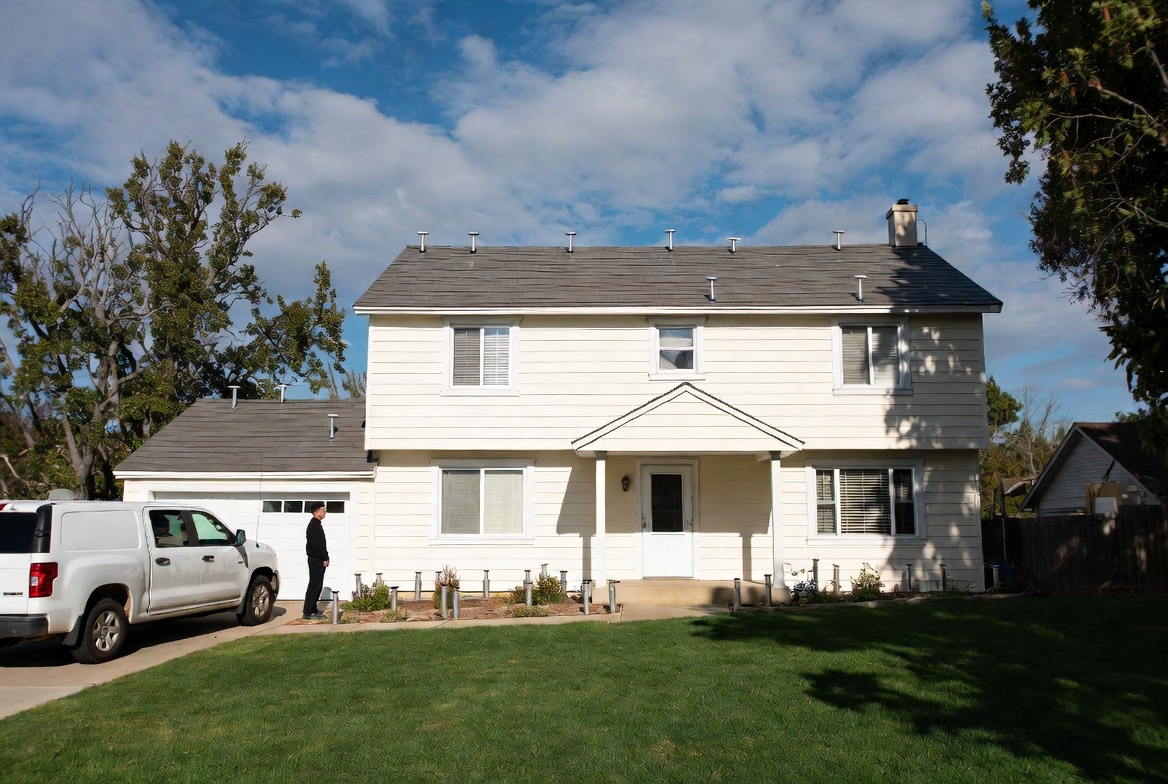
The goal of radon mitigation is to create a pressure differential that prevents radon from entering the home by drawing it from beneath the foundation and venting it safely to the atmosphere above the roofline. Most mitigation systems use a combination of sealing (cracks and gaps in the foundation) and active soil depressurization — actively removing radon-laden air from beneath the home and venting it outside.
🔧 Sealing
Sealing foundation cracks, gaps around pipes, and other pathways reduces radon entry. Sealing alone is rarely sufficient to reduce radon to safe levels but is typically part of a comprehensive mitigation strategy.
💨 Soil Depressurization
Active soil depressurization systems use a vent pipe and fan to pull radon-laden air from beneath the foundation and vent it above the roofline. This is the most common and most effective radon mitigation approach.
🌬️ Sub-Slab Depressurization
In homes with basements, pipes are inserted through the slab and connected to a fan system that depressurizes the soil beneath the foundation, preventing radon from rising into the home.
🧪 Passive Mitigation
In some cases, improved ventilation and passive pressure controls can reduce radon without active fans, though active systems are generally more effective and more common.
Radon Mitigation Costs
The cost of radon mitigation in Colorado typically ranges from $1,200 to $3,500 depending on the home's construction type and the complexity of the mitigation system required. A typical active soil depressurization system for a single-family home with a basement usually costs $1,500–$2,500. New construction can sometimes be built with radon-resistant features from the start, which is considerably less expensive than retrofitting.
This cost is significant but manageable, and critically, it's often something that can be negotiated between buyer and seller during the home inspection period. If radon testing reveals elevated levels, the buyer can request that the seller remediate the property as a condition of the sale, or can negotiate a credit toward mitigation costs. Rick Cavallaro and Rhino Realty Pros handle this negotiation routinely and know how to position it effectively.
Radon and Your Home Purchase: What to Do
Here's the practical sequence for any Adams County buyer:
Radon Disclosure: What Sellers Must Tell You
Colorado law requires sellers to disclose any known radon information — including prior test results showing elevated levels or the presence of a radon mitigation system. If a home has been tested and radon levels were elevated, the seller must disclose this. If mitigation has been installed, the seller must disclose the system's presence and ideally its maintenance history.
This disclosure requirement exists for exactly the reason you'd expect: radon is a health issue that affects buyer decisions, and buyers have a right to know about it. A seller who discloses radon mitigation proactively is giving you valuable information about a problem they've already solved. A home with an existing mitigation system that's functioning properly is far preferable to a home with elevated radon and no mitigation.
Prior radon testing results (both good and bad). The presence of any radon mitigation system. The date mitigation was installed and by whom. Maintenance history of the mitigation system. Any follow-up testing results after mitigation installation. These disclosures are required by Colorado law and should appear on the residential property disclosure form or be communicated separately before closing.
Radon and Home Value: Does It Matter?
Radon itself — the presence of the gas — doesn't directly affect home value. What affects value is whether it's been tested, what the test results are, and whether mitigation has been done. A home with elevated radon levels that haven't been tested or addressed represents unknown risk and carries buyer concerns that depress value. A home where radon has been tested, found to be elevated, and properly mitigated has that issue resolved and carries no more risk than any other home.
In practice, radon rarely becomes a deal-killer in Adams County transactions — it's too common for buyers to expect homes to be radon-free. What it does do is create a negotiation point: if elevated levels are discovered, the buyer can credibly request mitigation or a credit. And for sellers, having radon mitigation already in place and functional is a subtle but real asset — it removes a common buyer concern.
The Bottom Line on Radon in Adams County
Radon is a real health issue that's geologically common in Colorado and Adams County specifically. It's invisible and odorless, which makes it easy to ignore. It's also completely manageable — you can test for it cheaply, you can mitigate it effectively, and you can protect your family's health by taking it seriously. The homes of people who understand radon and test for it are safer than the homes of people who pretend it doesn't exist.
For every Adams County home purchase, radon testing should be routine — as automatic as checking the roof or the foundation. If elevated levels are discovered, mitigation is a straightforward solution with a knowable cost. If levels are safe, you have confidence and peace of mind. Either way, you're making an informed decision based on actual data rather than guessing.
Rick Cavallaro and the team at Rhino Realty Pros include radon testing in our standard inspection guidance for every buyer, and we help clients evaluate results and negotiate mitigation when necessary. We don't treat radon as a scary unknown — we treat it as a testable, solvable problem that's part of responsible homeownership in Colorado. That's the approach we recommend to everyone.
Buying in Adams County? Let's Talk About Radon Testing.
Contact Rick Cavallaro and Rhino Realty Pros today. We'll make sure radon testing is part of your inspection process, help you understand your home's radon status, and guide you through mitigation decisions if elevated levels are discovered. Radon shouldn't be a mystery — it should be a managed part of your home purchase. Let's get it done right.
Schedule Your ConsultationCategories
Recent Posts