Analyzing the Airbnb Laws: Where is Short-Term Rental Investment Still Viable in Denver Metro?

Short-term rental restrictions have become increasingly common across Colorado and the Denver metro area. What was once a straightforward investment strategy has become complicated, risky, and in some areas, impossible. Rick Cavallaro and the team at Rhino Realty Pros are seeing investors caught off-guard by changing regulations, losing rental income streams, and facing substantial financial losses. If you're considering short-term rental investment in Metro Denver, you absolutely must understand the current legal landscape before purchasing. Here's what you need to know.
The reality is that short-term rental viability varies dramatically depending on location. Some areas have banned them entirely. Others allow them with restrictions. A few still allow relatively free operation. Understanding this distinction is crucial to any investment decision.
Denver City Restrictions: The Reality
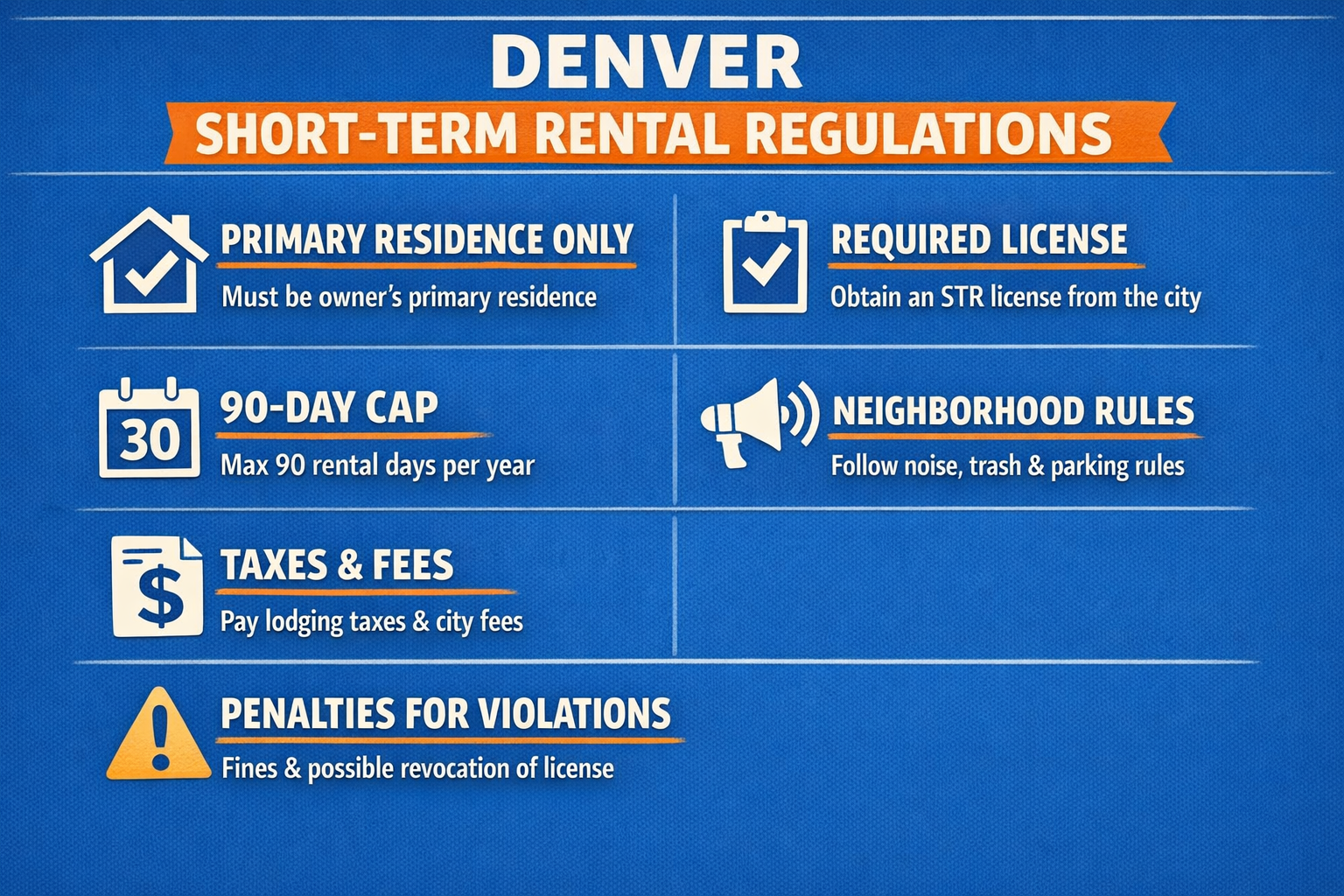
Denver itself has implemented strict short-term rental regulations. As of 2026, Denver requires short-term rental hosts to have a license, limits the number of STRs in residential neighborhoods, and prohibits them entirely in many areas. The regulations are complex and strictly enforced.
License required from the city (strict requirements). Host must occupy the property as primary residence or be on-site. Limited to one STR per host in residential zones. Primary residence only—no investor-owned STRs. Prohibited in Capitol Hill and other neighborhoods. Significant fines for violations ($500-$2,000+ per violation). Active enforcement by the city. Many Airbnb listings have been delisted.
For investors, this is devastating. You essentially cannot operate a pure short-term rental investment property in Denver proper anymore. The primary residence requirement eliminates the investor model. Many investors who bet on short-term rentals have seen their entire strategy collapse.
Boulder and Other Restrictive Areas
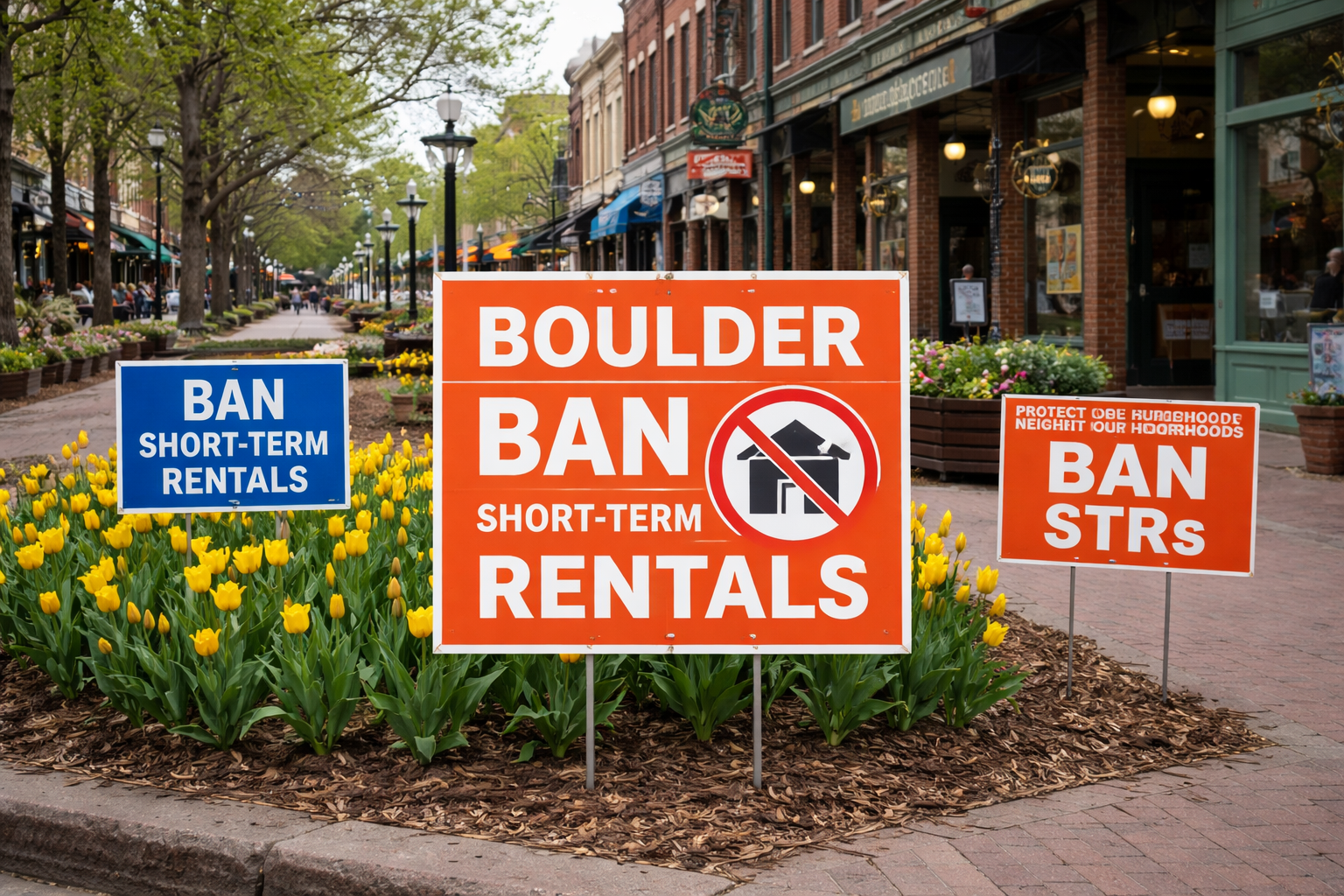
Boulder has taken an even harder stance, essentially banning short-term rentals in most of the city. This is particularly painful for investors who purchased specifically for the tourist market and young professional demand Boulder attracts.
Similar restrictions exist in Aspen, Vail, and other high-value tourist destinations. The pattern is clear: high-demand areas are cracking down hard on STRs to preserve long-term rental housing stock and reduce gentrification pressure.
Counties: Less Restrictive But Changing
Colorado counties outside Denver tend to be less restrictive than city governments. Douglas County, Jefferson County, and Arapahoe County have historically allowed short-term rentals with fewer restrictions. However, this is changing as complaints about nuisance properties and parking increase.
Areas like Littleton, Castle Rock, and unincorporated county areas still allow STRs with licensing, but this remains a gray area with regulations tightening. Investors should be cautious—what's allowed today might be restricted tomorrow.
Unincorporated Douglas County
Unincorporated Douglas County remains one of the more permissive areas in Metro Denver. Short-term rentals are still allowed with a license and adherence to basic rules. However, this could change, and restrictions are likely coming as the county grows and responds to complaints.
Jefferson County Foothills

The Jefferson County foothills (unincorporated areas near Morrison, Idaho Springs, and similar areas) remain relatively permissive for short-term rentals. These mountain communities historically had higher tolerance for vacation rentals. However, local sentiment is shifting, and regulations are tightening even here.
Colorado Springs: A Cautiously Viable Alternative
Colorado Springs has been more permissive than Denver, though regulations are still tightening. As of 2026, Colorado Springs allows short-term rentals with a license but requires compliance with zoning rules and neighborhood regulations. The market is still viable, but less lucrative than Denver.
License required but obtainable. Less regulatory pressure than Denver. Growing tourist market. Lower property prices than Denver. Fewer restrictions on investor-owned STRs (relative to Denver). Increasing regulation as the city grows. State tourism demand remains strong. More competitive market with lower nightly rates.
For investors, Colorado Springs offers more opportunity than Denver, but profit margins are compressed by lower nightly rates and increasing regulation. It's viable but requires careful analysis.
The Trend: Cities Are Banning, Counties Are Restricting
The broader trend across Metro Denver is clear: cities are cracking down, counties are following, and short-term rental investment is becoming increasingly difficult. This trend will likely accelerate as communities respond to housing shortage concerns and neighborhood quality of life issues.
Investors who banked on short-term rentals as a long-term strategy are being blindsided. What made sense in 2019 (buy property, turn it into an Airbnb, generate income) is increasingly unviable or illegal in 2026.
The Financial Reality for STR Investors
Even in areas where STRs are legally allowed, the financial model has deteriorated. Platforms like Airbnb have seen market saturation, increased regulations, and stricter enforcement that reduce nightly rates and occupancy rates. Competition has increased dramatically while regulations have tightened.
Many investors who purchased properties at $500k-$600k believing they'd generate $3,000-$4,000 monthly in short-term rental income are now finding nightly rates have dropped to $150-$200 and occupancy has declined to 60-70%. The math no longer works.
Purchase price: $500,000. Expected nightly rate: $150-$200 (declining). Monthly occupancy: 60-70% (declining). Monthly gross revenue: $2,700-$4,200 (declining). Operating costs (cleaning, management, utilities, maintenance): 30-40% of revenue. Platform fees (Airbnb): 15-20% of revenue. Property taxes and insurance: $400-$600/month. Typical monthly net income: $500-$1,200 (or 1.2-2.9% annual return on investment).
Compare this to long-term rental yields of 5-7% annually in many Metro Denver markets. STRs simply don't make financial sense anymore in most areas, even where they're legal.
The Pivot: Long-Term Rentals as the Viable Strategy
Smart investors are pivoting from short-term rentals to long-term rentals. Long-term rentals generate 5-7% annual returns with significantly less legal risk, regulatory burden, and operational complexity. You're not managing daily turnovers, cleaning crews, and guest complaints. You're collecting rent monthly.
Additionally, long-term rental investment is universally legal and accepted across all Denver metro communities. There are no regulatory risks. No licensing concerns. No threat of government bans. Long-term rental is the future for property investors in Colorado.
If You Must Pursue Short-Term Rentals
If you're absolutely determined to pursue short-term rentals, here's what you must do. First, thoroughly research the specific jurisdiction where you're buying. Understand current regulations in detail. Second, consult a real estate attorney about legal viability. Third, contact the local city or county to confirm regulations (don't rely on platforms like Airbnb which are often outdated). Fourth, run detailed financial projections based on current occupancy rates and nightly rates. Fifth, have an exit strategy if regulations change.
Most importantly, don't assume today's regulations will be tomorrow's. The trend is universally toward stricter STR regulations. Any investment should assume regulations will become more restrictive, not less.
The Bottom Line: Be Cautious
Short-term rental investment in Metro Denver has become significantly riskier and less profitable than it was just a few years ago. Regulations are tightening, occupancy rates are declining, nightly rates are compressing, and the financial returns are disappointing. Most areas have implemented or are implementing restrictions that severely limit STR viability.
For new investors, the math simply doesn't work in most scenarios. For existing STR investors facing regulatory crackdowns, the situation is challenging. The investment landscape has fundamentally shifted.
Rick Cavallaro and Rhino Realty Pros recommend that most investors pursuing income-generating real estate should focus on long-term rentals rather than short-term rentals. The returns are better, the legal environment is stable, and the operational complexity is lower.
Ready to Explore Viable Real Estate Investment Strategies?
Contact Rick Cavallaro and Rhino Realty Pros today. We'll help you analyze short-term rental regulations in your target area, discuss long-term rental alternatives, and develop an investment strategy that generates strong returns with minimal regulatory risk. Let's build your real estate investment strategy on solid legal and financial ground.
Schedule Your Investment ConsultationCategories
Recent Posts